Every few years, someone publishes a chart that makes the financial world pause. Instead of stocks or commodities, the lines trace the rising values of luxury handbags. The punchline always lands the same way: a few of these bags have quietly outperformed traditional investments. Not tech stocks, not gold, not even certain hedge funds. Handbags.
It sounds absurd at first. After all, a handbag is meant to hold a wallet and a phone, not a retirement strategy. Yet collectors and resale platforms have been tracking luxury bag prices long enough to notice something unusual. Certain models from houses like Hermès, Chanel, and a handful of smaller heritage brands have shown price appreciation that rivals, and occasionally surpasses, the returns of the stock market.
That doesn’t mean a closet full of purses is the next financial portfolio. But it does raise an interesting question. Why do some bags become objects of long-term value while most accessories fade into fashion history?
To answer that, it helps to look at the handful of handbags that have consistently defied expectations.
The Hermès Birkin: The Unlikely Financial Benchmark

If there is a single bag that has come to symbolize investment value, it is the Hermès Birkin. Introduced in the 1980s after actress Jane Birkin famously complained about not having a practical handbag during a flight, the Birkin has grown into something far larger than its origin story.
Hermès produces these bags slowly and deliberately. Each one is handcrafted by a single artisan in France. Production numbers remain famously opaque. What matters more is the perception that supply is tightly controlled. Walk into a Hermès boutique and ask for a Birkin, and you will quickly discover that buying one is not quite as straightforward as purchasing a typical luxury accessory.
Because of this scarcity, resale markets have thrived. Over the past two decades, Birkin prices have climbed steadily. A basic Birkin 30 in calfskin might retail for around $14,000 to $15,000 in recent years. The same bag, especially in pristine condition and a sought-after color, can sell on the secondary market for double that.
More unusual versions have done far better. Exotic skins, limited editions, and rare colors regularly command prices that reach well into six figures at auction.
Researchers studying luxury assets have noted that the Birkin has shown average annual appreciation that rivals or exceeds several traditional asset classes over certain time periods. In other words, someone who bought the right Birkin twenty years ago may have inadvertently purchased one of the better performing collectibles in modern luxury.
Not bad for a bag originally designed to carry diapers and magazines.
The Chanel Classic Flap: Quiet Compounding

While Hermès built its mystique on scarcity, Chanel has taken a different route. The Classic Flap bag has become one of the most recognizable handbags in fashion history. Quilted leather, chain strap threaded with leather, the double-C clasp. You can spot it across a crowded restaurant.
What makes the Classic Flap fascinating from an investment perspective is Chanel’s pricing strategy. Over the past decade the brand has raised retail prices repeatedly, sometimes multiple times a year. A medium Classic Flap that once cost under $3,000 in the early 2000s now retails close to $10,000 in many markets.
Those price increases ripple into the resale world. Buyers who purchased earlier models have watched values climb simply because the retail price keeps moving upward.
Vintage pieces have become particularly desirable. Bags produced during the 1980s and 1990s, often praised for their heavier hardware and thicker leather, frequently sell for significant premiums. Collectors hunt for these earlier versions the way watch enthusiasts chase specific reference numbers.
Unlike the Birkin, the Chanel Classic Flap is not rare. Chanel produces thousands every year. But the steady drumbeat of price increases has created an unusual effect: the bag behaves almost like a slow compounding asset.
The Chanel 2.55: A Collector’s Favorite

Before Karl Lagerfeld introduced the Classic Flap with the interlocking CC logo, Coco Chanel had already designed the 2.55 in February 1955. The name comes directly from that date.
The 2.55 has a rectangular lock rather than the iconic CC clasp, and the chain strap lacks the woven leather detail. Those small differences make the bag feel slightly more understated, almost archival.
Collectors appreciate that sense of history. As fashion continues to rediscover vintage design, the 2.55 has gained renewed attention. Limited editions, anniversary releases, and original vintage models often sell at impressive prices on the secondary market.
While its appreciation has not been as dramatic as the Birkin, the 2.55 demonstrates another truth about luxury collectibles. Authenticity and historical relevance matter. When a design is tied directly to a house’s origin story, it tends to age gracefully.
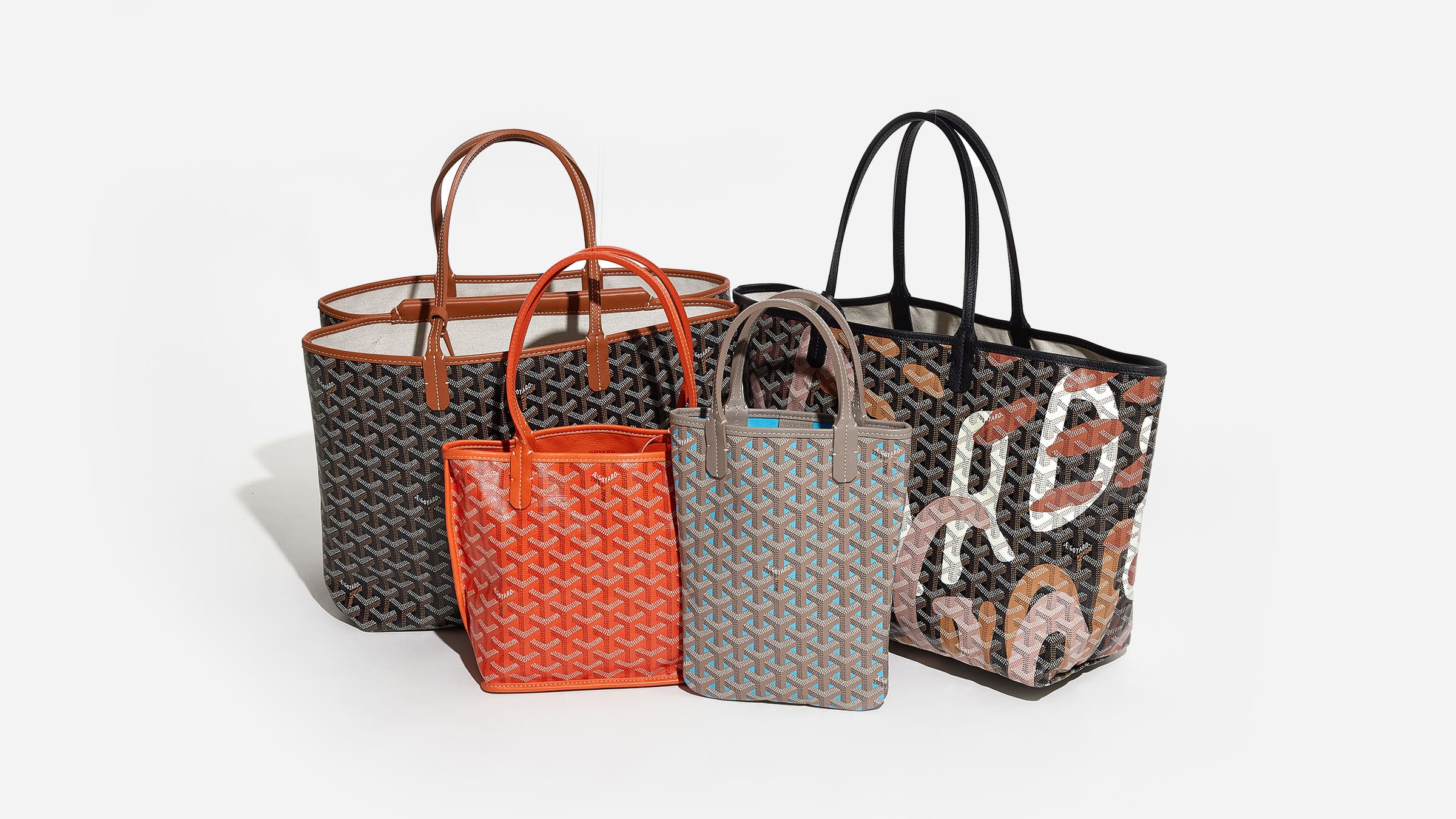
The Goyard St. Louis Tote: The Quiet Resale Star

Unlike Hermès or Chanel, Goyard operates with near total discretion. The brand avoids advertising, rarely speaks to the press, and famously does not sell products online.
That secrecy has become part of its allure.
The St. Louis tote is perhaps the brand’s most recognizable bag. Made from the signature Goyardine canvas with a distinctive chevron pattern, it is lightweight, reversible, and surprisingly practical.
In boutiques the St. Louis costs several thousand dollars depending on size. On the resale market it often sells above retail, particularly when demand spikes or when certain colors become hard to find.
The interesting thing about Goyard is that its resale strength does not rely on hype cycles. Instead it comes from consistent scarcity and a loyal customer base that treats the brand almost like a secret club.
The St. Louis tote may not reach the astronomical numbers of a Birkin, but it has quietly maintained strong resale value for years.
The Hermès Kelly: Elegance With Staying Power

The Kelly bag predates the Birkin by decades. Originally called the Sac à dépêches, it gained its modern name after Princess Grace Kelly famously used the bag to shield her pregnancy from photographers.
Compared to the Birkin, the Kelly has a more structured silhouette and a top handle. Some collectors consider it the more elegant of the two.
From a market perspective, Kelly bags follow a similar trajectory to Birkins. Retail prices rise steadily, boutique availability remains limited, and the resale market often reflects strong premiums.
Certain sizes, particularly the Kelly 25 and Mini Kelly, have become highly coveted in recent years. These smaller bags align with contemporary fashion trends while maintaining the brand’s heritage aesthetic.
Collectors often treat Kelly bags as long-term pieces rather than quick resale opportunities. Over time, however, many have watched their values climb anyway.
Why Some Bags Appreciate While Others Don’t
The idea that handbags can outperform financial markets might suggest that any luxury accessory could be a good investment. That assumption would be a mistake.
Most handbags depreciate the moment they leave the store. The few that appreciate share several characteristics.
First, the brand must have strong heritage and cultural relevance. Houses like Hermès, Chanel, and Goyard have spent decades building reputations that extend far beyond seasonal fashion.
Second, supply must be limited. If a bag is widely available, it rarely develops the scarcity needed to drive resale demand.
Third, the design itself has to be timeless. Bags that rely heavily on trends often age quickly. The pieces that perform best tend to have simple silhouettes and recognizable craftsmanship.
Finally, condition matters. A pristine bag with original packaging and documentation will always command higher resale prices than one that shows heavy wear.
These factors combine to create the rare handbag that behaves more like a collectible asset than a simple accessory.
The Role of the Resale Market
Another reason certain handbags have gained investment status is the rise of the luxury resale market. Platforms specializing in authenticated designer goods have made it easier for buyers and sellers to participate in this ecosystem.
Collectors can now track price histories, compare listings, and gauge demand across multiple regions. This transparency has helped establish market values that resemble those of traditional collectibles like watches or vintage cars.
Resale platforms also provide authentication services, which are essential in a market where counterfeits exist. Buyers who might once have hesitated to purchase pre-owned luxury items now feel more confident entering the market.
As resale continues to grow, the investment narrative surrounding certain handbags has become harder to ignore.
A Word of Caution
It would be tempting to conclude that luxury handbags are a reliable financial strategy. The reality is more nuanced.
Markets shift. Fashion trends change. What feels like an iconic design today may not hold the same cultural relevance decades from now. Even the most celebrated bags depend on brand stewardship and long-term demand.
Collectors who approach luxury handbags purely as investments often miss the point. The people who benefit most from appreciating bag values tend to be those who bought them because they loved them.
They carried them. Used them. Enjoyed them. Years later they discovered that the bag was worth more than what they paid.
That is a very different mindset from treating handbags like stocks.
The Real Value of an Iconic Bag
Luxury bags that outperform the stock market make for great headlines. They are fascinating case studies in branding, scarcity, and cultural influence.
Yet their true value often lies somewhere less measurable.
A well-designed bag becomes part of a person’s daily life. It travels with them, absorbs memories, and ages alongside its owner. When a bag happens to hold financial value as well, that is simply an unexpected bonus.
In the end, the best handbags behave a bit like good art. They remain beautiful, relevant, and desirable long after the season that introduced them has passed.
And occasionally, almost by accident, they turn out to be excellent investments too.
Several luxury handbags have historically shown price appreciation comparable to or exceeding certain stock market returns. The most notable examples include the Hermès Birkin, Hermès Kelly, Chanel Classic Flap, and Chanel 2.55. These bags maintain strong resale value due to limited production, consistent demand, and their status as fashion icons.
The Hermès Birkin is often cited as one of the strongest performing luxury collectibles. Because Hermès strictly controls production and distribution, demand frequently exceeds supply. This has allowed Birkin bags in popular sizes, colors, and leathers to appreciate significantly on the resale market over time.
Luxury handbags increase in value when they combine brand heritage, limited availability, and timeless design. Bags from houses like Hermès and Chanel are produced in controlled quantities and have global recognition, which drives demand. When retail prices rise and supply remains limited, resale values often increase as well.
No, most designer bags depreciate after purchase. Only a small number of iconic models consistently hold or increase their value. These typically come from heritage luxury brands and include classic silhouettes such as the Birkin, Kelly, Chanel Classic Flap, and select limited-edition pieces.
Several factors influence resale value, including brand reputation, model popularity, leather type, color, condition, and rarity. Neutral colors like black or gold often perform best, while exotic leathers and limited editions can command higher prices among collectors.
You can check resale values through luxury resale platforms, auction houses, and consignment websites that specialize in designer goods. These marketplaces track demand and provide a good benchmark for current market prices of bags such as Birkin, Kelly, Chanel Classic Flap, and other collectible pieces.
Luxury handbags should not be considered direct replacements for traditional investments like stocks or bonds. While some bags have appreciated in value, their performance depends on brand popularity, rarity, and market demand. Most collectors treat handbags primarily as luxury purchases rather than financial assets.


One Comment